Read about Infinite Studio and discover our past conference presentation slides.

August 13, 2025
multispectral atmosphere talk

Modelling an accurate multispectral atmosphere in a real-time physics simulation

Accurately modelling the atmosphere across a broad range of the electromagnetic spectrum is essential to many electro-optical and infrared physics simulations in complex environments (land, sea and air). However, detailed spectral models of the atmosphere are very large and rendering them in real-time leads to trade-offs between simulation speed and accuracy, potentially tarnishing the validity of the simulation. Infinite Studio is a collection of plugins powered by Unreal Engine, offering real-time performance and development tools for simulations in these complex environments within the visible and infrared wavebands. Infinite Studio utilises atmospheric models from the software package MODTRAN to render spectrally accurate atmospheres for simulation. This talk will cover the approximations that have been made in Infinite Studio to streamline and optimise the MODTRAN outputs without degrading the accuracy of the data. These approximations are useful for any application using MODTRAN’s atmospheric models which seeks to improve performance efficiency.
August 13, 2025
Valid real-time radiometric simulations of multi-band infrared scenes in Unreal Engine 5

Valid real-time radiometric simulations of multi-band infrared scenes in Unreal Engine 5

Creating valid computer models of photonic infrared cameras is crucial for many simulation applications in both civilian and defence settings. We used EMVA standard 1288 following the photon transfer technique to characterise six photonic infrared cameras from Teledyne FLIR. The six cameras spanned the short-wave infrared, mid-wave infrared, and long-wave infrared wavebands. The performance parameters of these cameras were imported into the Unreal Engine simulation program using Aurizn's “Infinite Studio” plugins to create six digital clones. We compared the simulated outputs with the measured results to validate Infinite Studio's camera model. Our comparison showed sub-percentage level agreement for the short-wave and mid-wave infrared cameras and showed agreement to the few-percent level for the long-wave cameras, proving the accuracy of the Infinite Studio suite of radiometric plugins for Unreal Engine. This talk will discuss the methods of characterising infrared cameras for use in simulations.

Radiometry

  • Infinite Studio has multiple custom nodes that have been programmed to allow the integration of spectral material parameters, including emissivity and reflectivity, into Unreal Engine’s physically based rendering material system

  • Users can create materials by supplying measured spectral diffuse and specular reflectivity, emissivity, and transmission data, or by defining a spectral directional-hemispherical reflectance curve.

  • In addition, Infinite Studio provides acess to spectral material databases such as NASA JPL’s ECOsystem Spaceborne Thermal Radiometer Experiment on Space Station (ECOSTRESS) Spectral Library, and the Advanced Spaceborne Thermal Emission Reflection Radiometer (ASTER) Spectral Library
  • Infinite Studio currently supports MODTRAN for verified high-fidelity atmospheric calculations

  • The following data is imported from MODTRAN and processed to in-band values:
    • - Atmospheric transmission based on absorption and scatter
    • - Thermal radiance
    • - Solar and lunar irradiance for applying sun and moon directional light source intensities
    • - Ambient sky lighting (global illumination)
  • Fully Volumetric Cloud modelling using MODTRAN to obtain transmission and path radiance values across cloud density

  • Clouds are compatible with all lighting and transmissive effects, including shadows on the ground and cloud reflections.

  • Highly customisable with options for weather effects, noise maps, coverage levels, altitude, wind speed, and many more parameters

  • Ability to add individual cloud volumes and control placement, as well as an overall bulk layer property
  • Ability to pre-calculate higher fidelity surface temperatures for static background objects

  • In-band thermal emissions are evaluated by spectral integration

  • Grey body and selective radiators are implemented using spectral emissivity data

  • Custom spectral emission curves can be imported for non-blackbody emitters
  • Camera and Sensor Modelling

    Stages of the In-Band Rendering Equation Solver:

  • Render Radiance Image: Detector Spectral Response, Resolution
  • Radiance to Photons conversion: Pixel Pitch, F-Stop, Shutter Speed, Lens Transmission
  • Photons to Electrons conversion: Quantum Efficiency, Full Well Capacity
  • Electrons to Counts: ADC Gain & Offset, ADC Bit Depth
  • At each stage of rendering, applicable noise sources are simulated and can be customised:

  • Dark Shot Noise: Dark current flows even when no photons are incident on the camera
  • Read Noise: Electronic Signal Noise resulting from sensor design
  • Photon Shot Noise: Statistical noise associated with the arrival of photons at the pixels
  • Fixed Pattern Noise: Caused by spatial non-uniformities of the pixels
  • Aliasing occurs when the rasterization process during rendering of a scene does not apply enough samples to a target resulting in scintillation artefacts

  • Long range targets subtending few pixels could wildly vary in intensity as sample points hit and miss the target all together

  • Zoom anti-aliasing is effectively rendering a part of the sensor image, a window, at a much higher resolution and averaging the image down to the original resolution, resulting in a more accurate distribution of energy

  • The advantage of this approach is that anti-aliasing can be adaptively applied to parts of the scene where it is needed optimizing performance by not applying it where it is not
  • External Control

    Available in C++, Python, and Java, the External Control API supports full control of the simulation, via TCP/IP, including commands to::

  • Simulation Control (Begin, End, Propagate)
  • Querying available assets by path, or type
  • Open and Load levels
  • Spawn, move & destroy actor assets
  • Camera and sensor setting modification
  • Environmental control (atmosphere, wind, clouds & ocean) and
  • Custom message types

    Infinite Studio provides multiple example scripts, demonstrating the most commonly used features.
  • Trajectory: Trajectory Spline Actor provides actor scripted 6-DOF motion via time referenced dynamic state data.

  • Recording Tools: Record actor and sensor image data, for single or multi-runs, useful for post run analysis in third-party tools.

  • Waypoints: An experimental waypoint capability has been added for air, land & maritime platforms and includes infantry soldiers. Waypoints can be imported from CSV files, manually entered or added at runtime. Users can specify many options covering waypoint actions, including initial speed, speed between points, and end of course behaviour.
  • Target Labelling: Rendering of scenes with target pixel (stencil) labelling for training of neural networks, machine learning or data analytics tasks

  • Loop Controller: Orbits a camera about a given target at varying ranges writing captured image data to file. Customisable loop control for changing additional scene features; such as the environment (atmosphere, time of day, sea sate, etc.)
  • Machine Learning Stencil offMachine Learning Stencil on

    Maritime-Based Physics

  • Emissions: Based on Planck’s blackbody radiation equation for a specified ocean temperature

  • Reflections: Reflectance varies directionally according to the Fresnel Law of reflection

  • Transmittance: Optional transparent material applies translucent fogging to submerged objects based on depth/view angle
  • Fully customisable FFT based wave spectrum model of time-varying ocean height fields

    Wave height and chop driven by real world parameters, e.g:
  • Wind speed and direction
  • Ocean depth
  • Fetch length

    Additional user customisation possible, ranging from simple amplitude/property scaling through to complete user-generated wave spectrum
  • Buoyant Forces: Surface Platforms use a finite element solution to calculate buoyancy and wave motion. Forces are then consolidated to the object’s centre of buoyancy, and corresponding moments are generated to affect the platform’s motion

  • Energy Conservation/Momentum Collisions: Each element approximates the change in energy due to the collision between the object surface and the fluid element

  • Limitations: Currently the buoyancy model only imparts forces from the fluid to the object (the high fidelity wakes model generates coupled surface wave motion)
  • High Fidelity Wakes: An experimental high-fidelity volume displaced wake implementation

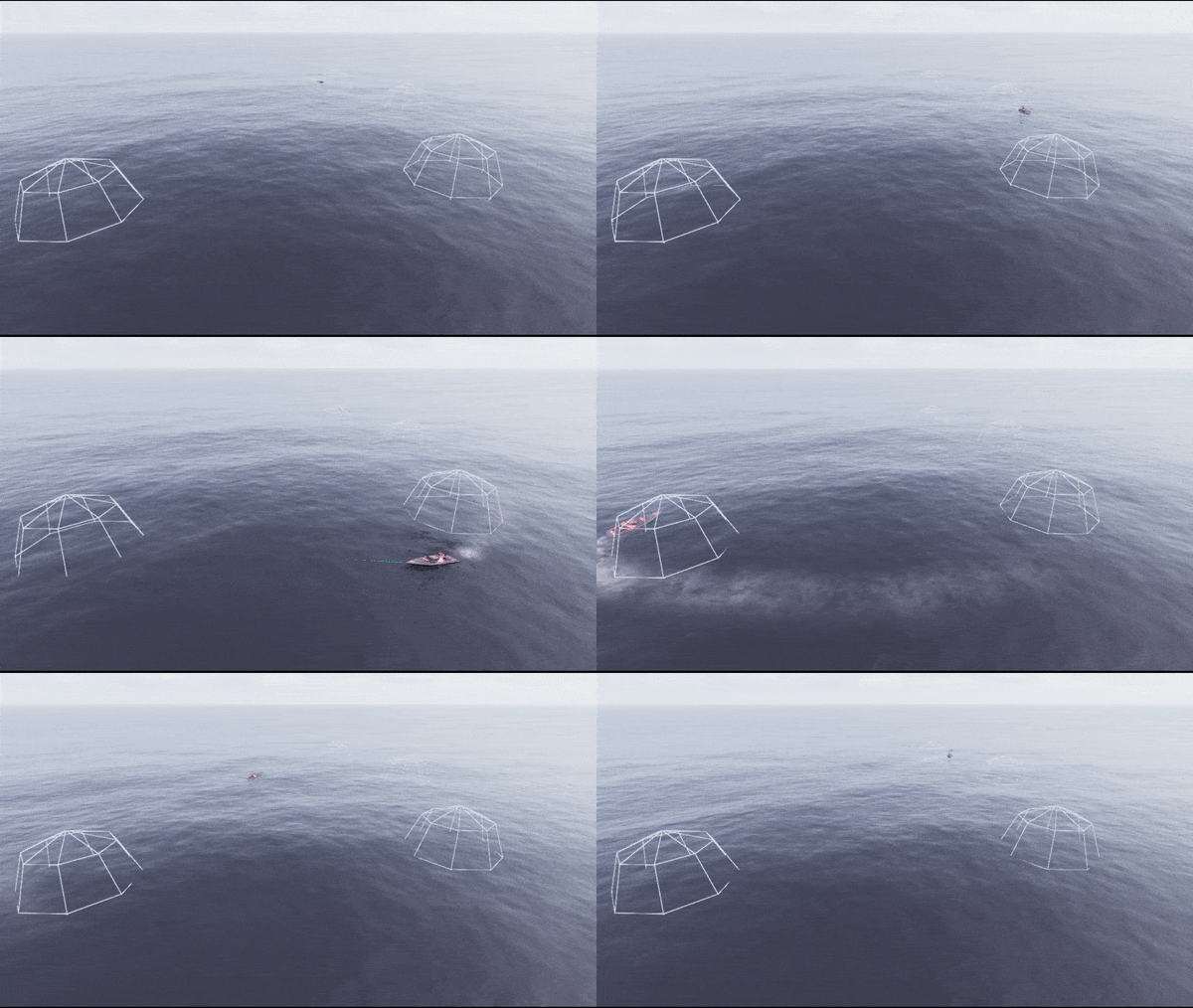
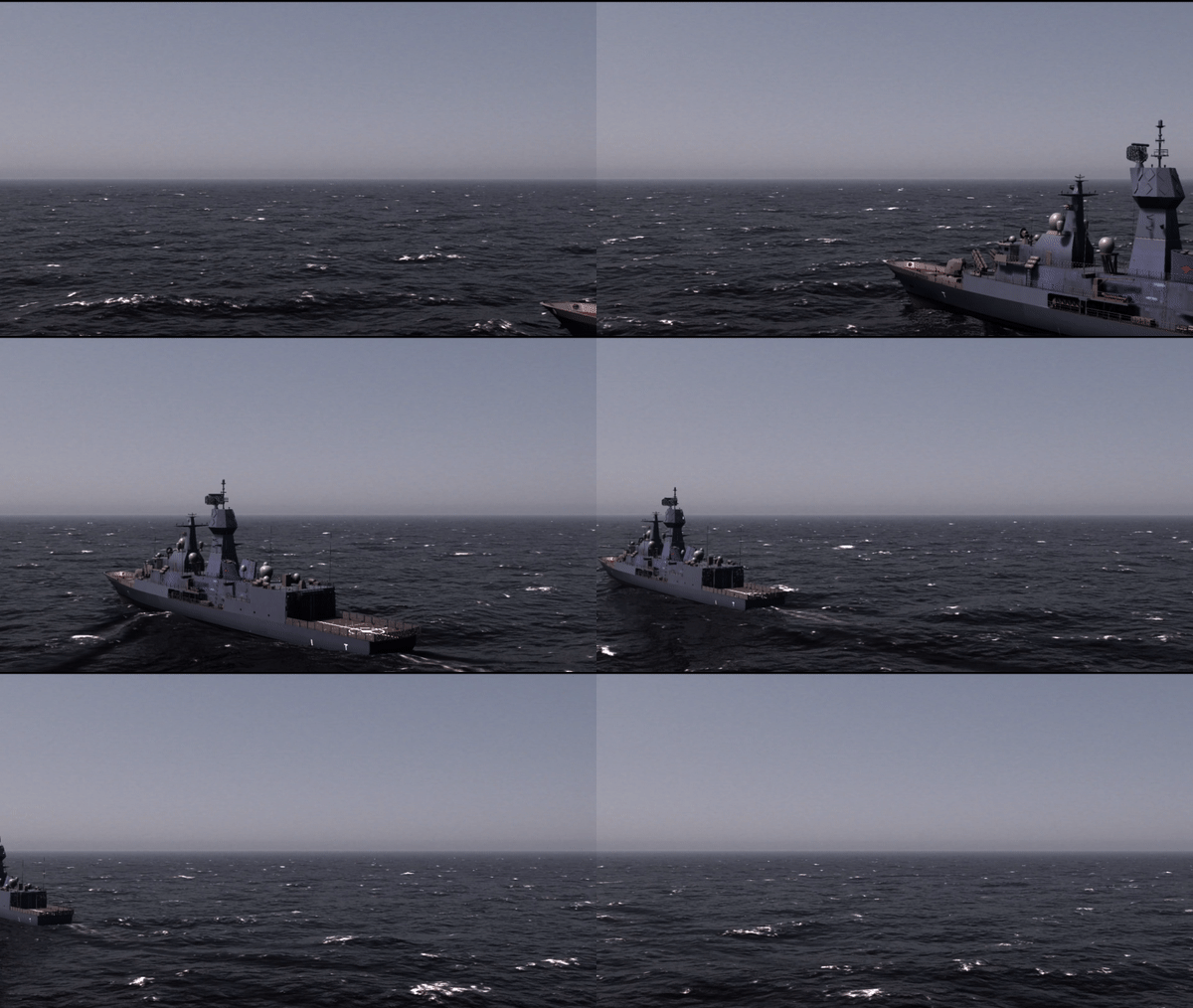
  • High Performance Wakes: A high performance turbulent (foam) and kelvin wake implementation, allowing hundreds of wakes rendered on screen for real-time solutions
  • Additional Content and Features

    As well as demo maps, Infinite Studio provides you with the toolset to create your own real world landscapes

  • Street Map Importer: New real word scenes have been developed, with buildings, roads, railways, vegetation as imported from OpenStreetMap and terrain height data from the Registry of Open Data on AWS Global Dataset. You can also create and import your own custom height sampler

  • Real World Maps: Urban, rural, forests, grasslands, deserts, mountains, littoral and open ocean scenes can be quickly and accurately generated using Infinite Studio
  • Infinite Studio can provide the tools to create and edit your own assets, in addition to a library of Unrestricted Assets.

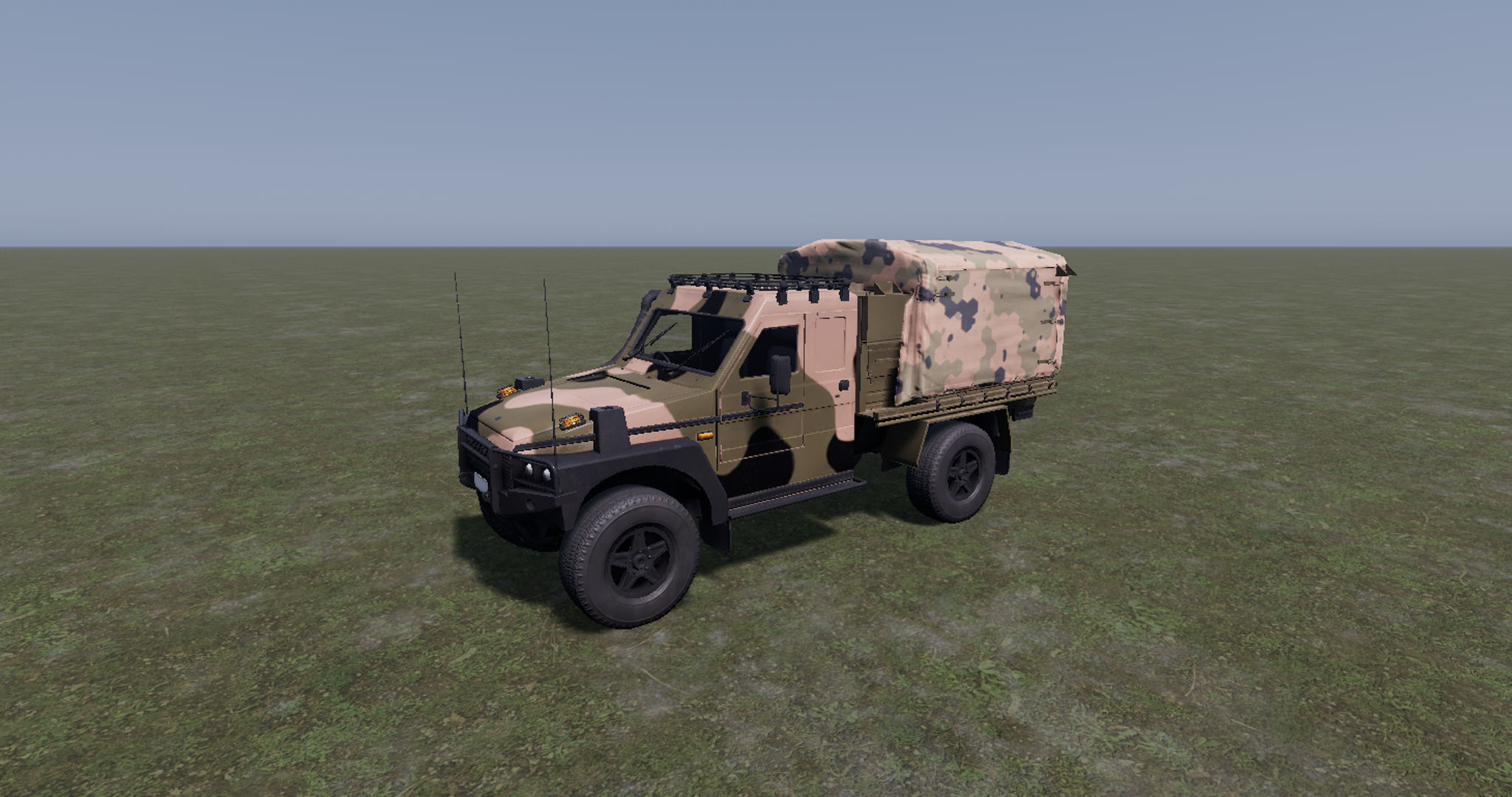
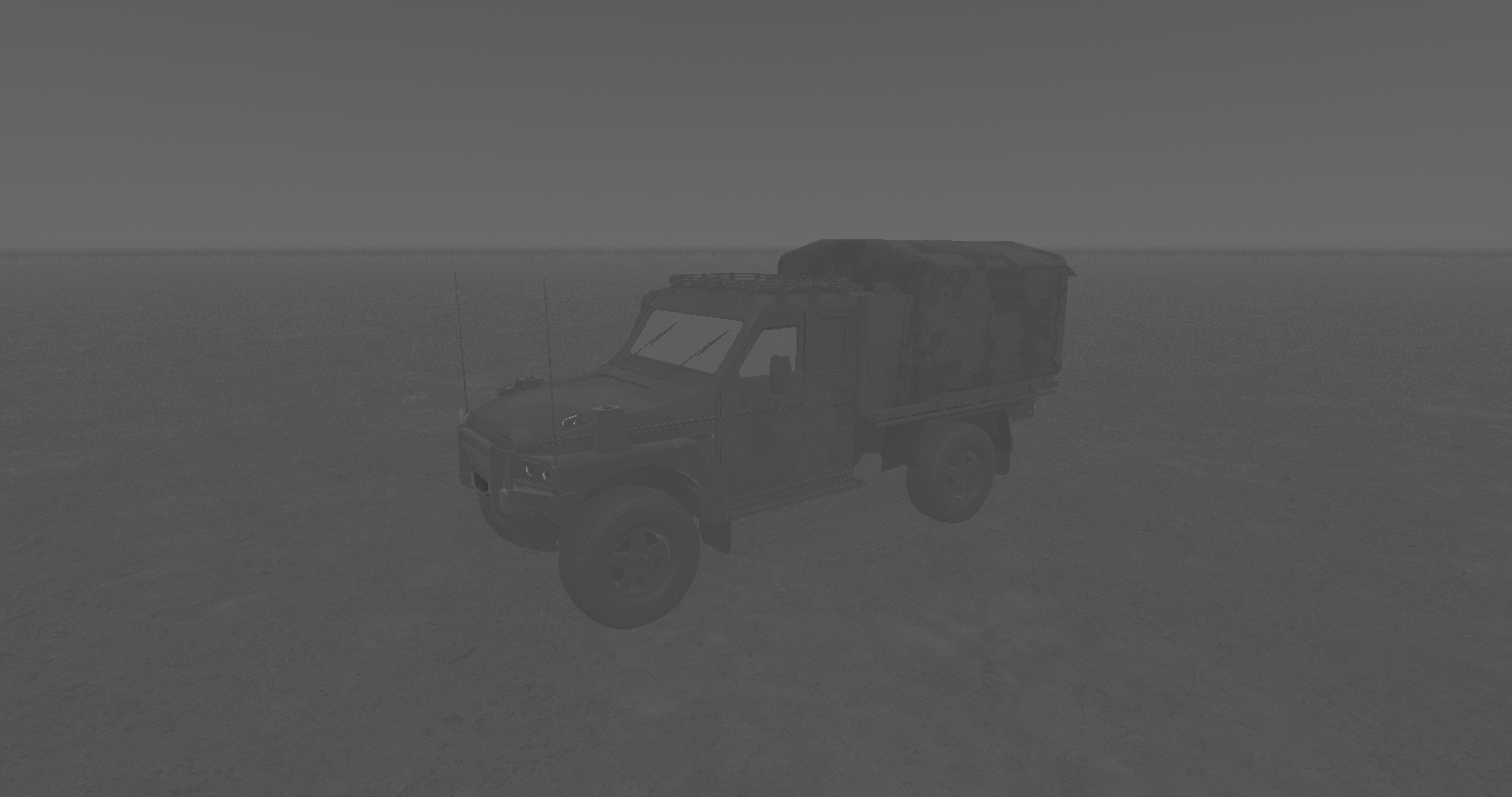
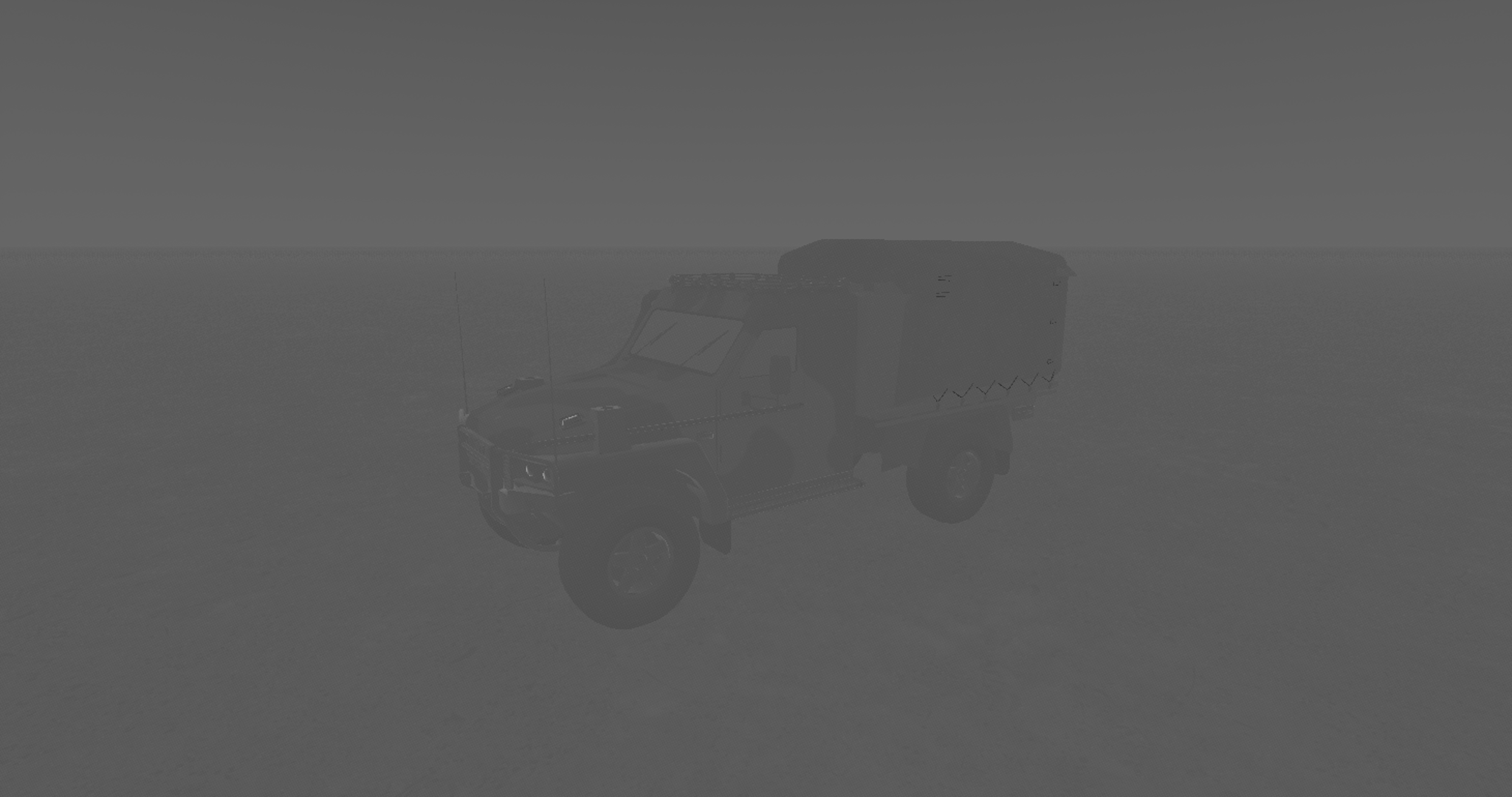
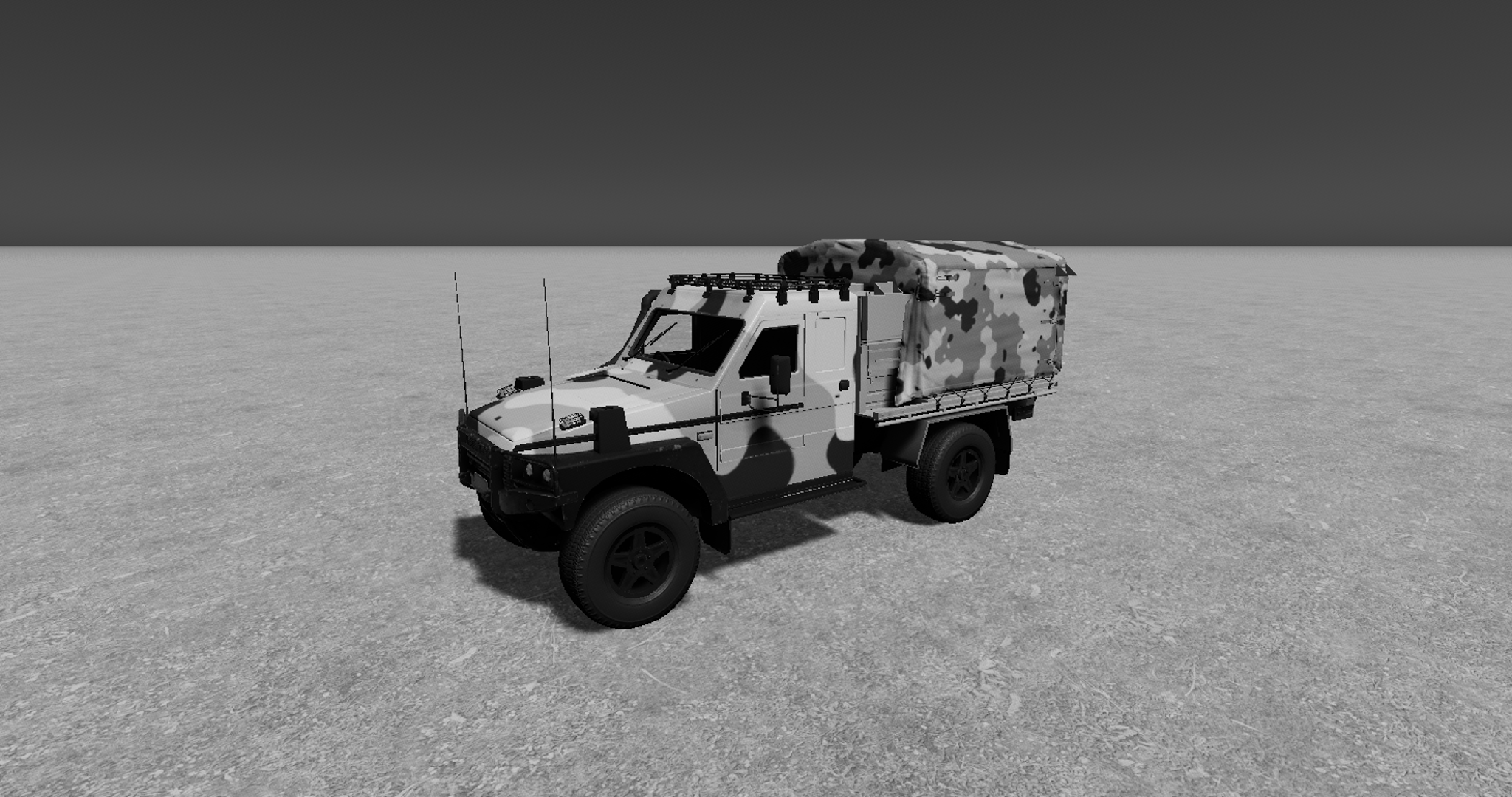
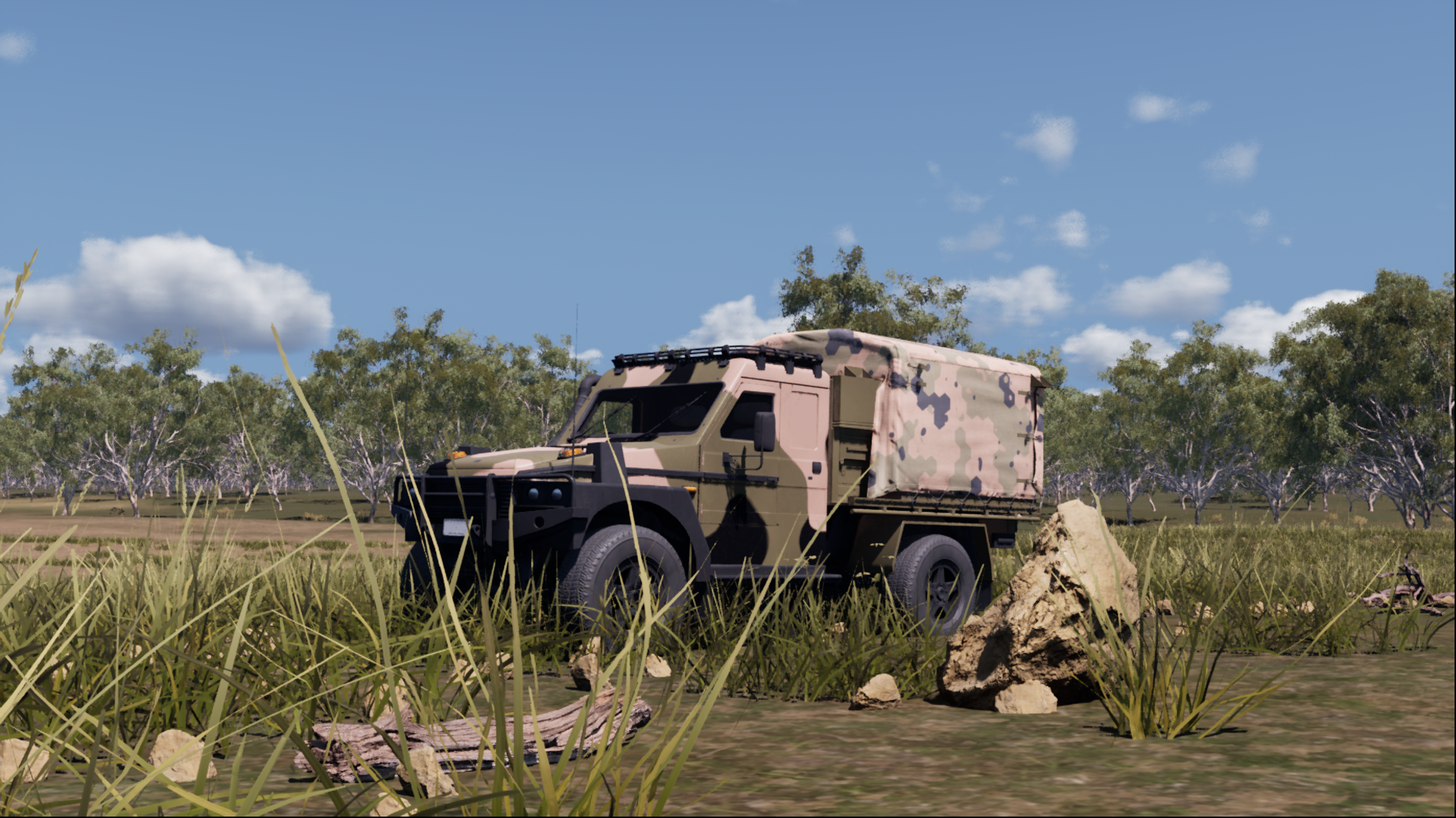
  • 3D model library of aircraft, ships, vehicles, weapons, people, infrastructure & nature assets pre-configured with multispectral materials

    Learn more on the Content page:
  • Multi-player networked scenario management for human-in-the-loop real-time simulations
  • Island Locale

    Rural Locale

    Urban Locale

    Curved Earth

    The Curved Earth Plugin implements a spherical Earth model based on the WGS84 reference ellipsoid and provides accurate projections for applications that require precise Earth curvature modelling.

    Two modes of operation are supported:
  • OpenStreetMap mode – applies materials to land-use areas defined by OSM data.
  • Blue Marble mode – uses NASA’s Blue Marble satellite textures for surface rendering.

    This approach ensures optimised performance and scalable rendering of the spherical Earth model across different zoom levels and viewing angles.
  • Asset Packs

    For more video turntables of our 3D assets, click on the buttons:

    Night Sky

    LaTex

    @online{Paschotta_2012_hollow_core_fibers,
    author = {Paschotta, R.},
    title = {Hollow-core Fibers},
    year = {2012},
    organization = {RP Photonics AG},
    journaltitle = {RP Photonics Encyclopedia},
    url = {https://www.rp-photonics.com/hollow_core_fibers.html},
    urldate = {2026-05-06},
    doi = {10.61835/x34},
    abstract = {Hollow-core fibers have a hole on the fiber axis, achieving optical guidance with photonic bandgap effects.},
    keywords = {hollow-core fibers}
    }